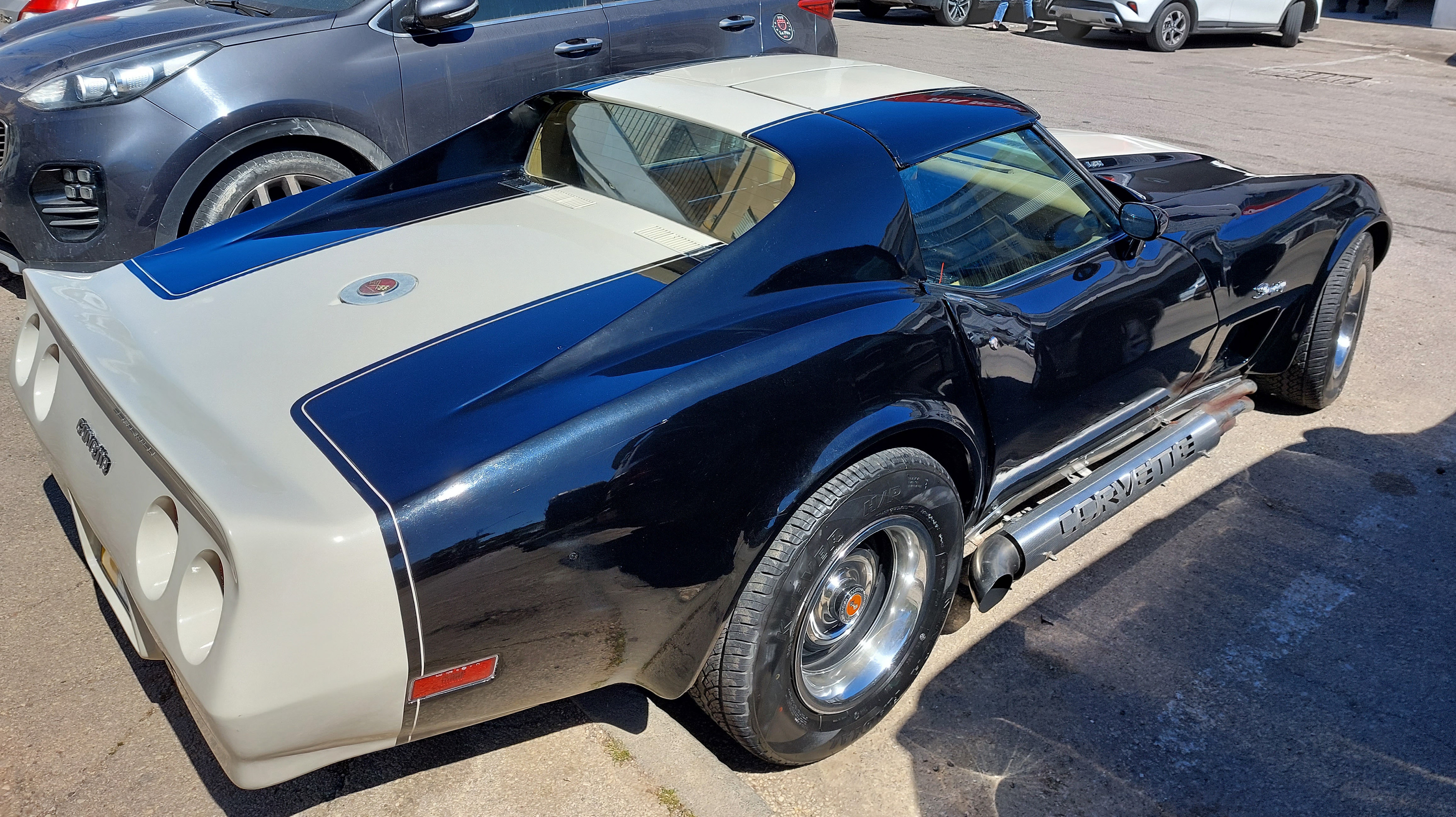
C3 Corvette, Street Find
The C3 Corvette does not blend in. It was never designed to, and five decades of depreciation haven’t changed that. Park one next to modern crossover traffic and it reads like a transmission from another civilization — lower, longer, more certain of itself than anything built to a contemporary emissions target and a five-star crash rating.
This example wears a two-tone finish, gloss black over silver-cream, that suits the body’s long fastback lines better than a single color would. The C3 generation ran from 1968 through 1982, one of the longest production runs in Corvette history, and the body styling changed so gradually across those fourteen years that pinning an exact model year from the rear quarter requires more than a casual glance. The wheel design and trim details here suggest a mid-to-late 1970s car — which means it was born into the worst period for American performance vehicles and survived anyway.
The energy crisis and federal emissions standards gutted the C3 through the second half of its production run. A car that had offered 435 horsepower in big-block form was reduced, by the late 1970s, to outputs that its earlier self would have found embarrassing. The chassis and the body remained, but the engine room told a different story. Buyers kept buying regardless. The shape was enough.
What saves a car like this across the decades isn’t performance data — it’s proportion. The C3 was styled under Bill Mitchell at GM Design, drawing from the Mako Shark II concept, and it achieved something that very few production cars manage: a silhouette that looks correct from every angle. The four circular taillights, the aggressive hip flare, the long hood tapering into a short rear deck — none of it needs apologizing for.
The chrome CORVETTE script across the lower rear fascia is period-correct detail that modern restorers are careful to preserve. It’s the kind of thing that would read as kitsch on anything else. On this car, it’s just identification.