The Only European City With No Cars Still Has an Engine Culture
Cars stop at Piazzale Roma. Past that point there is no road, no kerb, no parking, and no traffic in any sense a driver would recognise. What there is instead is a status hierarchy of powered vehicles that behaves exactly like car culture, with varnish standing in for paint and an outboard badge standing in for a bonnet script.
The object at the top of that hierarchy is the motoscafo, the licensed water taxi. It is a limousine in every respect except the medium: a long, low, hand-built hull, decks and coamings in lacquered mahogany, chrome brightwork, cream upholstery, and a cabin sized for six people and their luggage. The yards around the lagoon that build and rebuild these hulls work to a form that has changed very little in seventy years, for the same reason the London taxi kept its shape. The job did not change.
Underneath, the fit-out varies more than the outside suggests. Older boats run inboard diesels on a shaft. Newer and rebuilt hulls increasingly carry outboards hung on a bracket at the transom, and the badge on that cowling is doing the same work as a manufacturer’s script on an engine cover. It announces power, service network, and how recently the owner spent money.
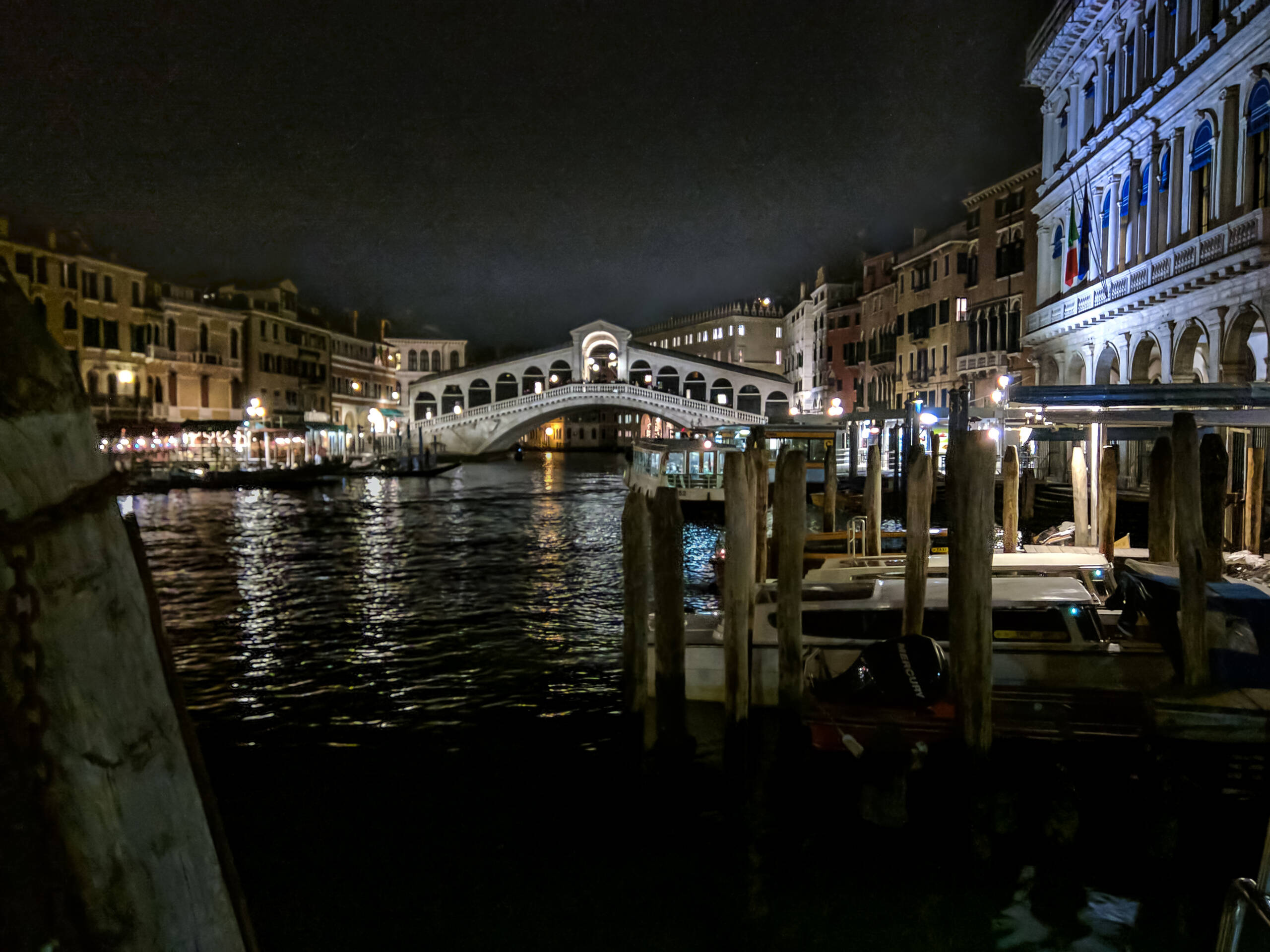
The economics are closer to owner-operated haulage than to leisure boating. A taxi licence in Venice is a scarce transferable asset with a resale market, the way a medallion works in some cities. The hull is a capital item that depreciates slowly if it is maintained obsessively and quickly if it is not, and maintenance in salt water is relentless: brightwork, bilges, anodes, seals, and a varnish schedule that never ends. Owners talk about their boats in the register that classic car owners use, because the ownership problem is the same one.
Below the taxis sit the workboats, which are the pickup trucks of the city: flat-decked, unvarnished, scarred at the gunwale from a thousand quay landings, running whatever engine was cheapest and most serviceable. Then the private topa and sandolo, then the gondola, which is the one vehicle here with no engine at all and the most demanding build of any of them. A gondola is asymmetric by design, wider on one side to counteract the single oar, and it is fitted to the weight of the man who will row it.
The cultural point is that removing cars did not remove any of this. The instinct to distinguish yourself by what you arrive in, to spend on finish that no passenger will inspect, to know which yard built which hull and who did the last refit, survived the absence of roads intact. Venice does not prove that a city without cars is a city without vehicle culture. It proves the culture attaches to the vehicle, not to the wheel.