Ferrari Portofino: The Folding Hardtop That Made the Entry Ferrari a Real Grand Tourer
Black paint, cream leather, silver five-spoke wheels, yellow calipers. Parked nose-out in a public lot with the roof up, which is how most of these actually live. The Portofino is the car people point at and call “the small Ferrari,” and that description has been wrong since roughly 2018.
The lineage here starts with the 2008 California, which arrived carrying more firsts than any Ferrari of its decade: first front-mid-engined V8, first seven-speed dual-clutch gearbox, first multi-link rear suspension, and the first retractable hardtop the factory ever built. Purists hated it on sight. The roof mechanism added mass. The proportions were awkward from certain angles. The rear end looked like it had been designed by a different department, because in a sense it had been. And it sold in numbers Maranello had not seen before, largely to people who had never owned a Ferrari at all.
That is the uncomfortable fact at the centre of this car’s history. The model the enthusiast press treated as a dilution turned out to be the one that funded everything else.
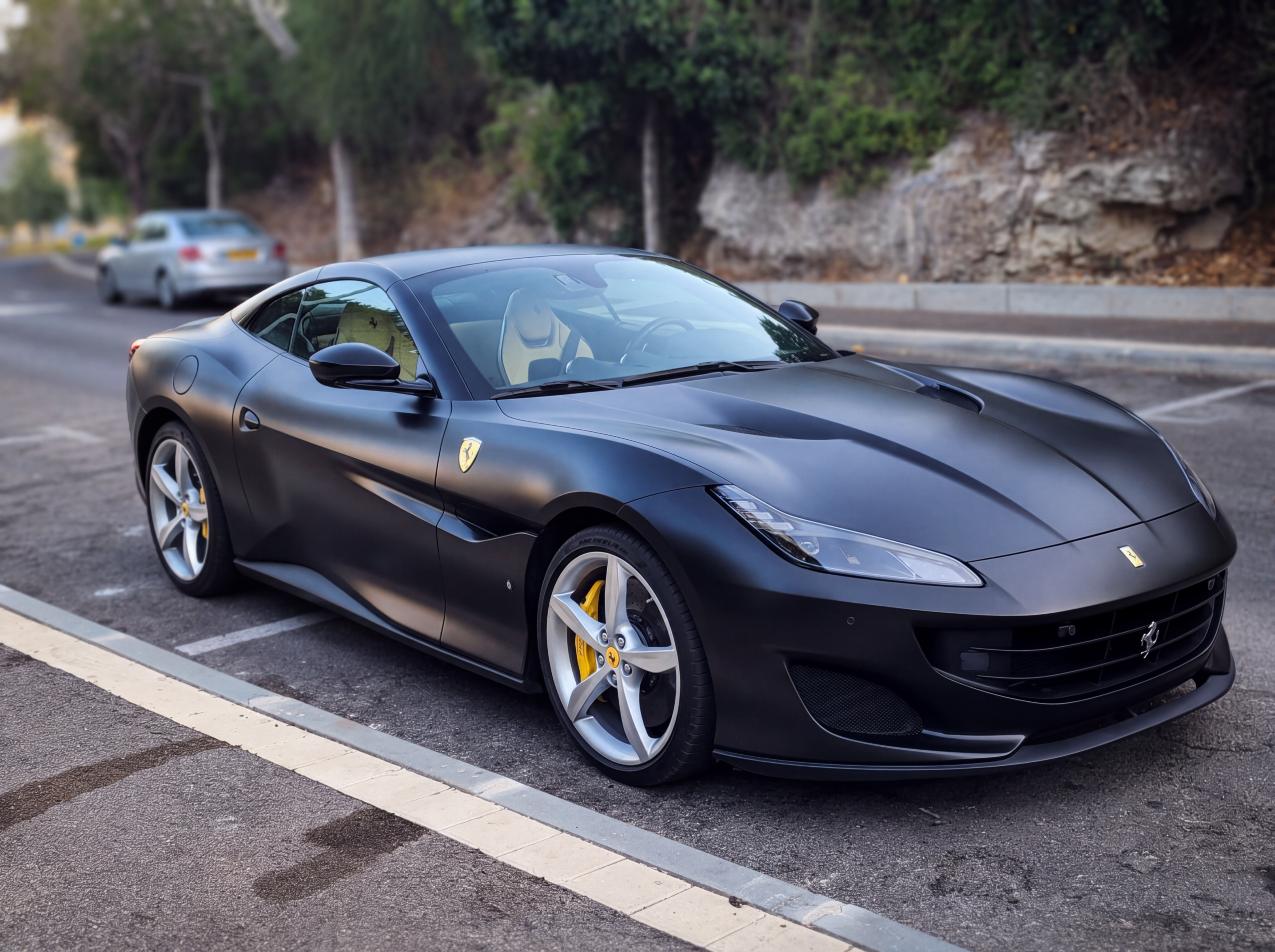
What the Portofino Actually Fixed
The California T of 2014 brought turbocharging and a great deal more torque. The Portofino, launched at Frankfurt in 2017 and on the road from 2018, went further and rebuilt the structure underneath. Every body panel was new. The chassis used redesigned castings and extrusions that cut weight while adding rigidity, which matters enormously on an open car, where the missing roof normally has to be paid for somewhere in the floor.
The 3.9-litre twin-turbo V8 makes 600 CV, up from the California T. Nought to 100 km/h takes about 3.5 seconds and the top end runs past 320 km/h. The hardtop folds away in roughly fourteen seconds and will do it while the car is rolling at low speed, which sounds like a party trick until you are sitting at a light watching the weather change.
More usefully, the cabin got wider, the rear seats went from decorative to briefly survivable, and the boot stayed large enough for a real weekend. The electric power steering was quicker than the hydraulic setup it replaced. Ferrari also fitted the electronic rear differential with the traction control system integrated, which had previously been reserved for cars positioned further up the range.
None of that is glamorous. All of it is what separates a grand tourer from a sports car with luggage aspirations.
The Turbo Question
The purist objection to this car is the same objection raised about every turbocharged Ferrari V8 since the 488: the noise. A naturally aspirated Ferrari V8 climbing to 8,500 rpm is one of the defining sounds of the last forty years of road cars, and no amount of exhaust engineering brings it back once you put two turbochargers in the way.
Ferrari’s answer was variable boost management, which meters torque differently in each gear so the engine keeps pulling harder as you go up the box rather than delivering everything at once in second. It works. It is also, unmistakably, an engineering solution to a problem the previous engines never had.
Whether that trade matters depends entirely on what you want the car for. On a mountain road with the roof down, the Portofino’s flexibility is worth more than the top-end drama. On a track, you would want something else, and Ferrari sells you something else.
The Portofino M and What Came After
In 2020 Ferrari revised the car into the Portofino M. Power went to 620 CV, the seven-speed gearbox was replaced by the eight-speed unit developed for the SF90, and the manettino gained a Race setting, the first time an open-top V8 Ferrari of this type had been given one. New exhaust, revised turbo hardware, new front and rear treatment.
The M is the better car. The original Portofino is the more interesting one historically, because it is the point where the entry Ferrari stopped apologising for itself.
Fifteen years after the California, the folding hardtop is no longer a controversy. It is just how you build a car that has to work in a rainstorm and still look right with the roof stowed. Everyone got there eventually.
The purists were right that something was lost. They were wrong about what it bought.