Number 33: An Alfa Romeo Giulietta Spider in Its Natural Habitat
There is a category of car that does not need to be anywhere other than where it already is. The Alfa Romeo Giulietta Spider — Pininfarina’s body on Alfa’s twin-cam four, produced between 1955 and 1962 — belongs unambiguously to that category, and the blue example photographed on a Sicilian road as rally number 33 makes the case without any assistance. It is on an Italian island. It is Italian. The argument is closed.
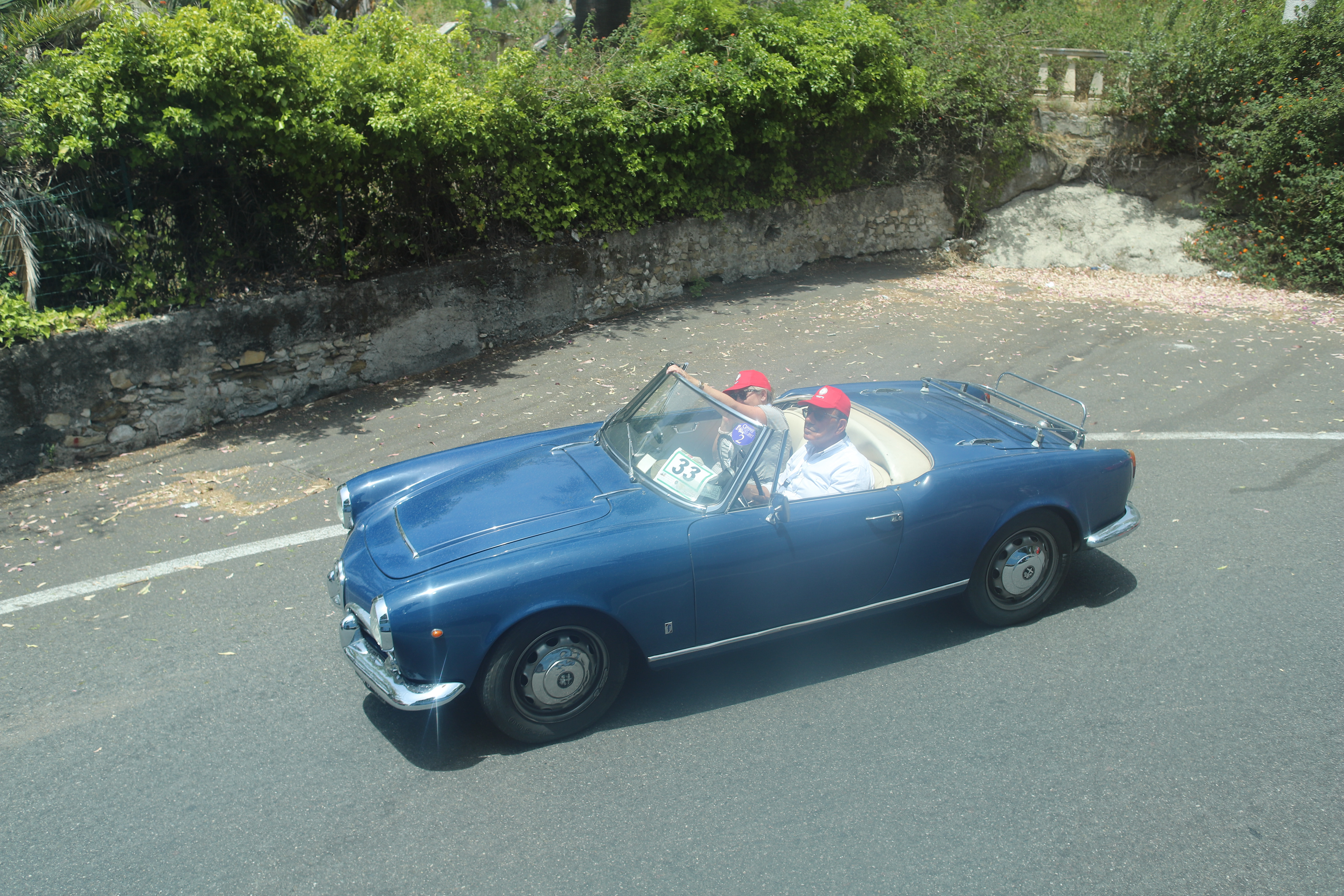
Pininfarina designed the Giulietta Spider body in 1955, the same year the car entered production, and managed something that very few coachbuilders have achieved before or since: a shape that appears to have been inevitable. There is nothing about the Giulietta Spider that looks like a decision. The low beltline, the simple windscreen surround, the restrained chrome detailing, the way the body tucks under at the rear — all of it reads as discovered rather than designed. This is the highest compliment available in automotive aesthetics and it applies fully here.
The car in the photograph wears a deep blue that suits it better than red would, which is a notable thing to say about an Italian car on a Sicilian road. Red is the obvious choice; blue is the correct one. The hub caps are original Alfa items. The interior shows cream or off-white upholstery, appropriate for the period. The folding top is down, as it should be, though unlike the American convertibles that appeared earlier in this rally’s running order, the Giulietta Spider does not depend on its open configuration for its identity. It is coherent either way. The top is down here because the day demands it and the car permits it, not because it requires the gesture.
Alfa Romeo built the Giulietta Spider on the same platform as the Giulietta Berlina and Sprint, which meant that buyers were getting genuine twin-cam engineering in a package that cost considerably less than a dedicated sports car. The 1300cc engine produced somewhere between 65 and 90 horsepower depending on state of tune, numbers that read as modest now and felt entirely adequate then on roads that were not yet built for speed. Sicilian roads, in particular, were not built for speed. They were built for the specific kind of driving the Giulietta Spider does well: deliberate, attentive, connected to the surface beneath and the landscape alongside.
The passenger in the photograph is waving — at the photographer, presumably, or at whoever is standing at the roadside watching the rally pass. It is the right instinct. When you are in a Giulietta Spider on a Sicilian road in summer, waving at people seems like the minimum appropriate response to your own good fortune.
Number 33 is the best car in this field. It knows it.